

≥98%
2381089-83-2
4625.28 g/mol
Peptides. Deep Dive
Research-based Podcast
Retatrutide
How retatrutide works in research
An average rating of 4.9/5 from verified customer feedback
Retatrutide
Triple-agonist peptide targeting GIP, GLP-1, and glucagon receptors for metabolic research.
- Buy3+for$170.05each andsave 5%
- Buy5+for$161.10each andsave 10%
- Buy10+for$152.15each andsave 15%
Peptides. Deep Dive
Research-based Podcast
Retatrutide
How retatrutide works in research
An average rating of 4.9/5 from verified customer feedback
Characteristics
| Property | Value |
|---|---|
| Molecular Formula | C₂₀₇H₃₁₈N₅₆O₆₃S |
| CAS Number | 2381089-83-2 |
| Molar Mass | ~4605 g/mol |
| Amino Acid Sequence | 39-amino acid peptide; triple agonist based on GIP backbone with GLP-1 and glucagon receptor activity |
| Synonyms | LY3437943, GGG tri-agonist |
| Physical Form | Lyophilized powder |
| Solubility | Soluble in aqueous buffers |
| Organoleptic Profile | White to off-white lyophilized powder; odorless |
| Storage Conditions | Store lyophilized at -20°C to 2-8°C; protect from light and moisture |
| Composition | Lyophilized retatrutide base |
How is Retatrutide Used in Research?
Retatrutide (LY3437943) is a novel triple hormone receptor agonist that simultaneously activates GIP, GLP-1, and glucagon receptors. This tri-agonist approach represents the next evolution in incretin-based pharmacology, building on dual agonism by incorporating glucagon receptor activity. The addition of glucagon receptor agonism is hypothesized to increase energy expenditure, enhance hepatic lipid oxidation, and promote thermogenesis, while the GIP and GLP-1 components provide appetite suppression and improved glycemic control.
The glucagon receptor component of retatrutide's activity profile is of particular scientific interest. Glucagon receptor agonism promotes hepatic glycogenolysis and gluconeogenesis, which under normal circumstances would elevate blood glucose. However, the concurrent GIP and GLP-1 receptor agonism appears to counterbalance this hyperglycemic potential while allowing the metabolic benefits of glucagon signaling — including increased energy expenditure, lipolysis, and amino acid catabolism — to be harnessed.
Preclinical studies in rodent models have demonstrated that rationally designed triple agonist peptides produce superior metabolic outcomes compared to dual or single agonists, including greater body weight reduction, improved glucose tolerance, and reduced hepatic steatosis. These findings have generated substantial research interest in tri-agonism as a pharmacological strategy.
This product is supplied in a lyophilized form and requires reconstitution prior to laboratory handling. For research and laboratory use only. Not for human or veterinary consumption.
Areas of Study
Triple Incretin Receptor Pharmacology
First-in-class tri-agonist engaging GIP, GLP-1, and glucagon receptors simultaneously for synergistic metabolic effects beyond dual agonism.
Energy Expenditure & Thermogenesis
Glucagon receptor agonism component is hypothesized to increase basal energy expenditure and promote thermogenesis in brown adipose tissue.
Hepatic Lipid Metabolism
Investigated for enhanced hepatic lipid oxidation and potential steatosis resolution through combined incretin and glucagon receptor signaling in preclinical models.
Glycemic Regulation
Studied in preclinical models for glycemic improvement where the glucagon component's hyperglycemic effect is counterbalanced by GIP/GLP-1 activity.
Adiposity Reduction
Preclinical rodent studies demonstrate superior body weight and fat mass reduction compared to single or dual receptor agonists.
References
- [1]Coskun T, Urva S, Roell WC, et al. (2022). LY3437943, a novel triple glucagon, GIP, and GLP-1 receptor agonist for glycemic control and weight loss: from discovery to preclinical proof of concept. Cell Metabolism, 34(9), 1234-1247.
- [2]Finan B, Yang B, Ottaway N, et al. (2015). A rationally designed monomeric peptide triagonist corrects obesity and diabetes in rodents. Nature Medicine, 21(1), 27-36.
- [3]Urva S, Coskun T, Loghin C, et al. (2022). The novel GIP, GLP-1, and glucagon receptor agonist retatrutide delays gastric emptying. Diabetes, Obesity and Metabolism, 24(9), 1854-1860.
Disclaimer: The information provided is for research reference only and does not constitute medical advice. Products are sold strictly for in-vitro research use.
Certificate of Analysis (COA)
Third-Party Verified Quality
Every batch of Retatrutideis independently tested by an accredited third-party laboratory. Our COAs include HPLC purity analysis, mass spectrometry identity confirmation, and batch-specific lot numbers. We publish these results publicly so you can verify exactly what you're getting.
View Lab ResultsGet the Full Research Guide
“Stillwater BioLabs: Evidence-Based Peptide Research” — our comprehensive guide covering peptide handling, reconstitution best practices, storage protocols, and research methodology. Free for all members.
Free forever. No credit card required. Instant access to research tools, exclusive content, and member pricing.
Related Products
 Popular
Semaglutide
GLP-1 receptor agonist researched for glycemic control and body weight regulation.
 Popular
Tirzepatide
Dual GIP/GLP-1 receptor agonist studied for metabolic regulation and weight management.
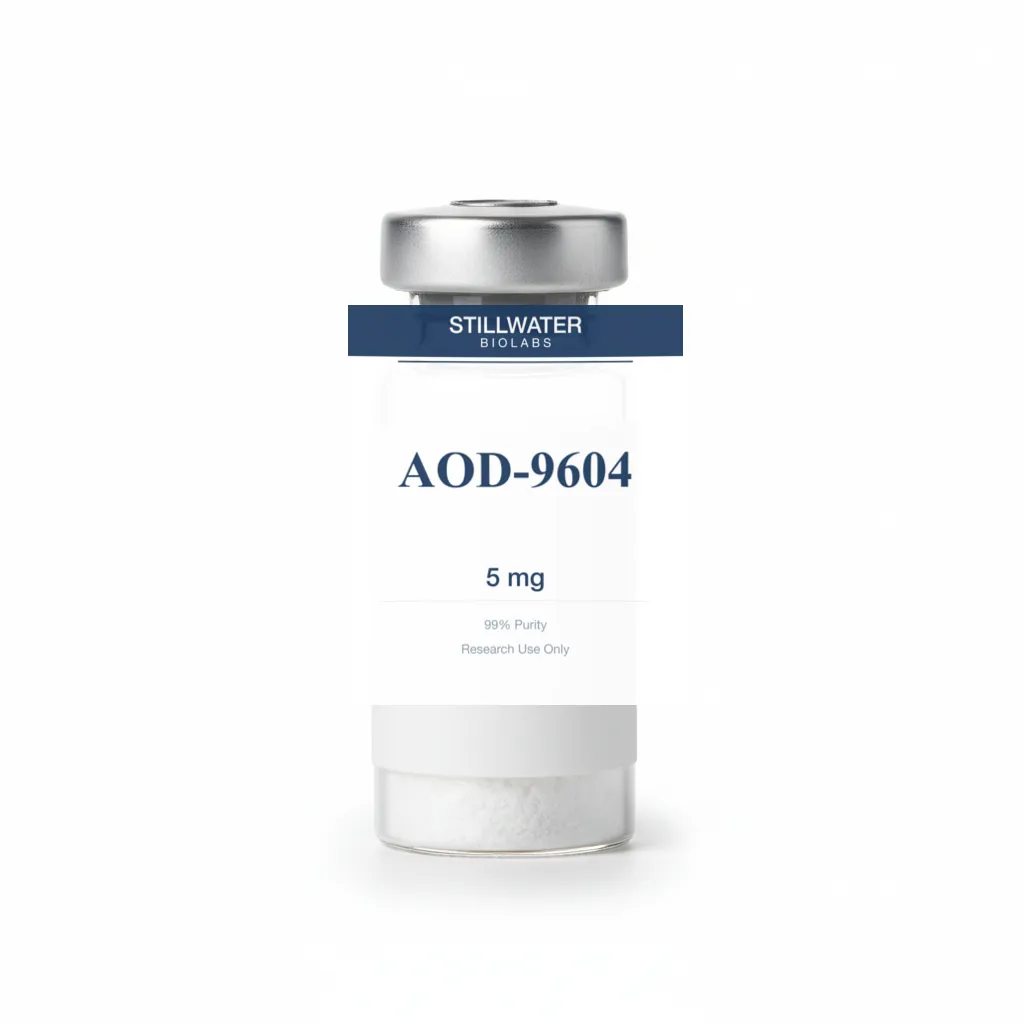
AOD-9604
A modified fragment of human growth hormone (hGH 177-191) studied for fat metabolism.

Cagrilintide
A long-acting amylin analog studied for appetite regulation and metabolic research.
Frequently Bought Together
Retatrutide
10mg
$179
Semaglutide
5mg
$99
Tirzepatide
10mg
$149
Bundle total
$427