

≥99%
1415456-99-3
4409.00 g/mol
Peptides. Deep Dive
Research-based Podcast
Cagrilintide
How cagrilintide works in research
An average rating of 4.9/5 from verified customer feedback
Cagrilintide
A long-acting amylin analog studied for appetite regulation and metabolic research.
- Buy3+for$71.25each andsave 5%
- Buy5+for$67.50each andsave 10%
- Buy10+for$63.75each andsave 15%
Peptides. Deep Dive
Research-based Podcast
Cagrilintide
How cagrilintide works in research
An average rating of 4.9/5 from verified customer feedback
Characteristics
| Property | Value |
|---|---|
| Molecular Formula | C₁₉₄H₃₁₂N₅₄O₅₉S₂ |
| CAS Number | 1415456-99-3 |
| Molar Mass | 4409.00 g/mol |
| Amino Acid Sequence | Long-acting acylated amylin analog (37 amino acids with C18 fatty diacid modification) |
| Synonyms | Cagrilintide, AM833, NN9838 |
| Physical Form | Lyophilized powder |
| Solubility | Soluble in water at slightly acidic pH |
| Organoleptic Profile | White to off-white lyophilized powder; odorless |
| Purity | ≥97% by HPLC |
| Storage Conditions | Store lyophilized at -20°C; reconstituted solution stable at 2-8°C for up to 7 days |
How is Cagrilintide Used in Research?
Cagrilintide is a long-acting, acylated analog of human amylin (islet amyloid polypeptide, IAPP) developed by Novo Nordisk for the treatment of obesity. Native amylin is a 37-amino acid peptide co-secreted with insulin from pancreatic beta cells that acts as a satiety signal, slows gastric emptying, and suppresses postprandial glucagon secretion. Cagrilintide incorporates amino acid substitutions and a C18 fatty diacid side chain that extends its pharmacokinetic half-life to support once-weekly subcutaneous dosing, overcoming the rapid degradation that limits the therapeutic utility of native amylin.
Clinical trials have demonstrated that cagrilintide produces significant, dose-dependent reductions in body weight in individuals with overweight or obesity. The peptide exerts its effects through activation of amylin receptors (AMY1, AMY2, AMY3), which are heterodimers of the calcitonin receptor with receptor activity-modifying proteins (RAMPs). Activation of these receptors in the area postrema and nucleus tractus solitarius of the brainstem reduces food intake through central satiety signaling. Cagrilintide has also been investigated in combination with semaglutide (a GLP-1 receptor agonist) under the combination name CagriSema, which has shown additive weight loss effects.
Preclinical research has characterized cagrilintide's pharmacological profile across multiple amylin and calcitonin receptor subtypes. The molecule demonstrates potent agonism at amylin receptors with a selectivity profile designed to minimize calcitonin receptor-mediated side effects. Research interest extends to its potential metabolic effects beyond weight loss, including improvements in glycemic control and cardiovascular risk markers.
This product is supplied in a lyophilized form and requires reconstitution prior to laboratory handling. For research and laboratory use only. Not for human or veterinary consumption.
Areas of Study
Appetite Regulation
Activates brainstem amylin receptors to reduce food intake through central satiety signaling pathways in the area postrema and nucleus tractus solitarius.
Metabolic Research
Investigated for effects on glycemic control, gastric emptying, and postprandial glucagon suppression beyond weight reduction.
Amylin Signaling
Potent agonist at AMY1/AMY2/AMY3 receptor heterodimers with engineered selectivity to optimize therapeutic profile.
Metabolic Research
Preclinical studies demonstrate dose-dependent effects on body weight and food intake; investigated as monotherapy and in combination with GLP-1 receptor agonists.
References
- [1]Mack CM, Soares CJ, Wilson JK, et al. (2010). Davalintide (AC2307), a novel amylin-mimetic peptide: enhanced pharmacological properties over native amylin to reduce food intake and body weight. International Journal of Obesity, 34(2), 385-395.
- [2]Enebo LB, Berthelsen KK, Kankam M, et al. (2021). Safety, tolerability, pharmacokinetics, and pharmacodynamics of concomitant administration of multiple doses of cagrilintide with semaglutide 2.4 mg for weight management. The Lancet, 397(10286), 1736-1748.
- [3]Hay DL, Chen S, Lutz TA, Parkes DG, Roth JD. (2015). Amylin: pharmacology, physiology, and clinical potential. Pharmacological Reviews, 67(3), 564-600.
- [4]Lutz TA. (2010). The role of amylin in the control of energy homeostasis. American Journal of Physiology-Regulatory, Integrative and Comparative Physiology, 298(6), R1475-R1484.
Disclaimer: The information provided is for research reference only and does not constitute medical advice. Products are sold strictly for in-vitro research use.
Certificate of Analysis (COA)
Third-Party Verified Quality
Every batch of Cagrilintideis independently tested by an accredited third-party laboratory. Our COAs include HPLC purity analysis, mass spectrometry identity confirmation, and batch-specific lot numbers. We publish these results publicly so you can verify exactly what you're getting.
View Lab ResultsGet the Full Research Guide
“Stillwater BioLabs: Evidence-Based Peptide Research” — our comprehensive guide covering peptide handling, reconstitution best practices, storage protocols, and research methodology. Free for all members.
Free forever. No credit card required. Instant access to research tools, exclusive content, and member pricing.
Related Products
 Popular
Semaglutide
GLP-1 receptor agonist researched for glycemic control and body weight regulation.
 Popular
Tirzepatide
Dual GIP/GLP-1 receptor agonist studied for metabolic regulation and weight management.

Retatrutide
Triple-agonist peptide targeting GIP, GLP-1, and glucagon receptors for metabolic research.
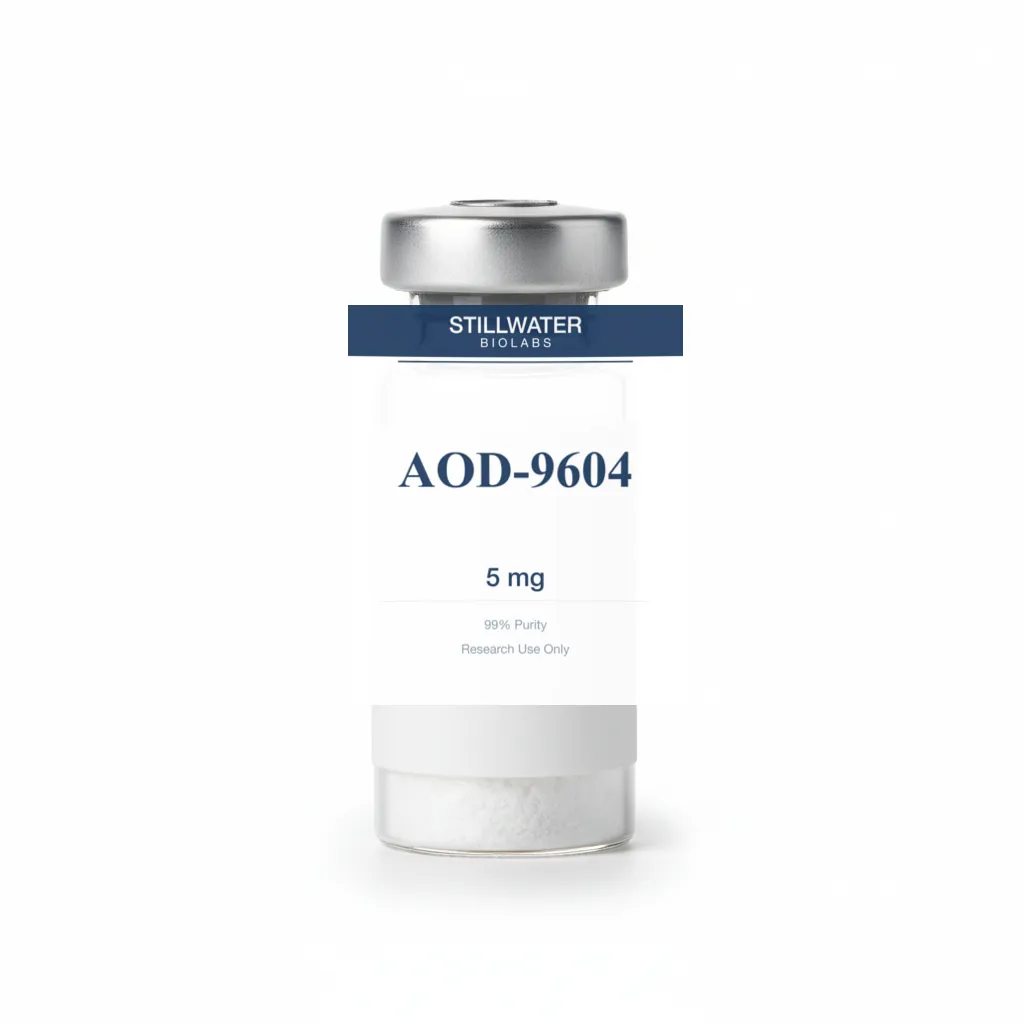
AOD-9604
A modified fragment of human growth hormone (hGH 177-191) studied for fat metabolism.
Frequently Bought Together
Cagrilintide
10mg
$75
Semaglutide
5mg
$99
Tirzepatide
10mg
$149
Bundle total
$323