
≥99%
137525-51-0
1419.53 g/mol
BPC-157
A 15-amino acid synthetic peptide fragment derived from human gastric juice protein, supplied as a lyophilized research reference standard for in-vitro cytoprotection assays and receptor-binding studies.
BPC-157 and the reproducibility gap in vendor-supplied samples
Stillwater Research Desk · what to verify before ordering
Minimum order: 10 units per compound, across any mix of sizes.



Pay with Visa, Mastercard, or AMEX · ACH bank transfer saves 5%
Cold-chain shipping via UPS, with tracking provided. Freight and lead time are confirmed on your quote.
Third-party tested
Supplied to qualified labs and institutional buyers. Institutional use & buyer eligibility
Characteristics
| Property | Value |
|---|---|
| Molecular Formula | C₆₂H₉₈N₁₆O₂₂ |
| CAS Number | 137525-51-0 |
| Molar Mass | 1419.53 g/mol |
| Amino Acid Sequence | Gly-Glu-Pro-Pro-Pro-Gly-Lys-Pro-Ala-Asp-Asp-Ala-Gly-Leu-Val |
| Synonyms | Body Protection Compound-157, Bepecin, PL 14736, PL-10 |
| Physical Form | Lyophilized powder |
| Solubility | Freely soluble in water and aqueous buffers |
| Organoleptic Profile | White to off-white lyophilized powder; odorless |
| Storage Conditions | Store lyophilized at -20°C; reconstituted solution stable at 2-8°C for up to 14 days |
| Composition | Lyophilized BPC-157 acetate salt |
How is BPC-157 Used in Research?
BPC-157 is a synthetic pentadecapeptide consisting of 15 amino acids, originally derived as a partial sequence from human gastric juice. It belongs to a class of compounds known as body protection compounds and has been the subject of extensive preclinical research since the early 1990s. In animal models, BPC-157 has been characterized across a broad range of biological assays, including in-vitro wound-assay outcomes and cell-migration kinetics in preclinical models involving muscle, tendon, ligament, and skin cell systems. Its mechanism of action is believed to involve modulation of the nitric oxide (NO) system, upregulation of growth-factor expression (including VEGF and EGF), and interaction with multiple molecular pathways including the FAK-paxillin and JAK-2/STAT-3 signaling cascades.
A substantial body of preclinical literature supports the peptide's role in gastrointestinal cytoprotection in GI epithelial cell models. Studies have shown that BPC-157 can counteract lesions induced by NSAIDs, alcohol, and various cytotoxic agents in gastrointestinal preclinical models, from the esophagus to the colon. The peptide has been characterized in in-vitro endothelial tube-formation (angiogenic) assays, considered central to its activity in tissue-repair research models. Research by Sikiric and colleagues has documented its activity in tissue-repair kinetics for anastomoses, fistulas, and other surgical research-model wounds in rat preclinical systems.
Beyond the gastrointestinal system, BPC-157 has been investigated in neuroprotective assay models. Preclinical studies suggest it may modulate dopaminergic and serotonergic systems, with reported cytoprotection in preclinical cell cultures against damage induced by cuprizone, MPTP, and other neurotoxins. The peptide has also been characterized in bone-fracture tissue-repair research models and in preclinical models counteracting corticosteroid-induced parameter shifts.
This product is supplied in a lyophilized form and requires reconstitution prior to laboratory handling. For research and laboratory use only. Not for human or veterinary consumption.
Areas of Study
Tissue-Repair Research Models
Investigated in in-vitro wound-assay outcomes and cell-migration kinetics in preclinical models of muscle, tendon, ligament, and skin cells through upregulation of growth-factor receptor signaling.
Gastrointestinal Protection
Studied extensively in GI epithelial cell models for cytoprotection against NSAID-induced lesions, alcohol damage, and inflammatory-marker modulation in preclinical studies.
Angiogenic Assay Studies
Research demonstrates activity in in-vitro endothelial tube-formation assays via VEGF pathway modulation, central to its regenerative-research-model profile.
Tendon & Ligament Research Models
Preclinical studies show cell-migration kinetics in preclinical models of transected Achilles tendons and other connective-tissue research models, studied in collagen/ECM assay models.
Neuroprotective Assay Models
Investigated for cytoprotection in preclinical cell cultures of dopaminergic neurons and modulation of serotonergic pathways in neurotoxicity research models.
References
- [1]Sikiric P, Seiwerth S, Rucman R, et al. (2018). Stable gastric pentadecapeptide BPC 157: novel therapy in gastrointestinal tract. Current Pharmaceutical Design, 24(18), 1990-2001.
- [2]Seiwerth S, Sikiric P, Grabarevic Z, et al. (1997). BPC 157's effect on healing. Journal of Physiology Paris, 91(3-5), 173-178.
- [3]Cerovecki T, Bojanic I, Brcic L, et al. (2010). Pentadecapeptide BPC 157 (PL 14736) improves ligament healing in the rat. Journal of Orthopaedic Research, 28(9), 1155-1161.
- [4]Sikiric P, Seiwerth S, Rucman R, et al. (2014). Stable gastric pentadecapeptide BPC 157-NO-system relation. Current Pharmaceutical Design, 20(7), 1126-1135.
- [5]Tkalcevic VI, Cuzic S, Brajsa K, et al. (2007). Enhancement by PL 14736 of granulation and collagen organization in healing wounds and the potential role of egr-1 expression. European Journal of Pharmacology, 570(1-3), 212-221.
Disclaimer: The information provided is for research reference only and does not constitute medical advice. Products are sold strictly for in-vitro research use.
Certificate of Analysis (COA)
Third-Party Verified Quality
Every batch of BPC-157 is independently tested by an A2LA-accredited (ISO 17025:2017) third-party laboratory using HPLC-UV/VIS for purity and measured quantity. Each COA carries the lab's signed report and a batch-specific lot number. We publish these results publicly so you can verify exactly what you're getting.
View Lab ResultsRelated Products
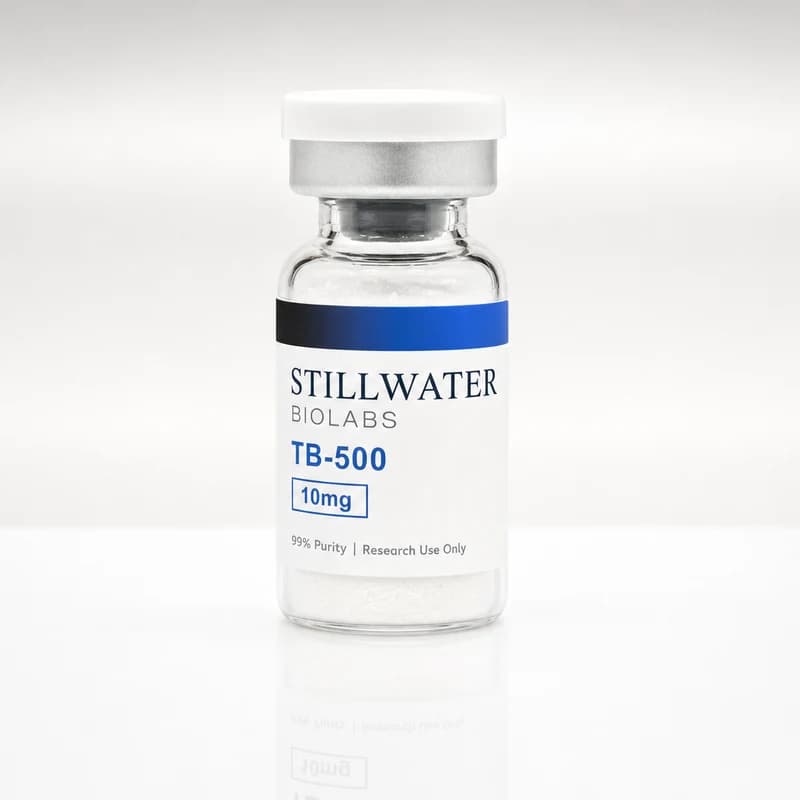
TB-500
5mg – 10mg
A 43-amino acid synthetic peptide (Thymosin Beta-4 fragment) supplied as a lyophilized powder for in-vitro actin-binding assays and cell-migration studies.
 Best Value
BPC-157 + TB-500 Blend
10mg (5mg/5mg) – 20mg (10mg/10mg)
A lyophilized blend combining BPC-157 (15 aa, 1419.53 g/mol) and TB-500 (43 aa, 4963.50 g/mol) for in-vitro co-incubation and synergy assays.
Frequently Bought Together
BPC-157
5mg
Request pricing
TB-500
5mg
Request pricing
BPC-157 + TB-500 Blend
10mg (5mg/5mg)
Request pricing